
FIFA's Hydration Breaks At The World Cup Are Worth $250 Million (and likely here to stay)
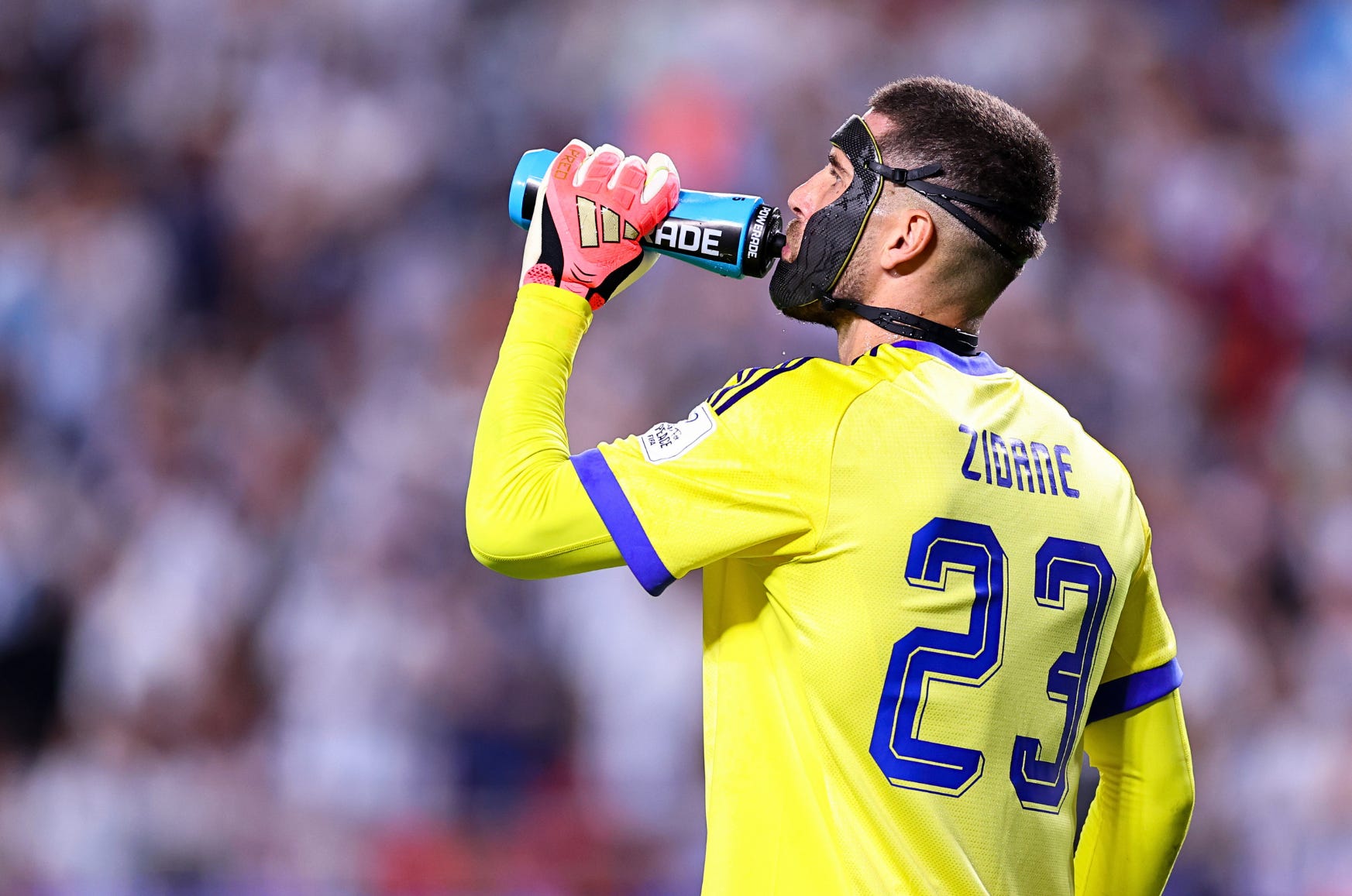
FIFA’s controversial decision to make three-minute hydration breaks mandatory during all 104 matches at this year’s World Cup — regardless of weather — has created valuable in-game advertising inventory, and Fox is monetizing it hard.
According to the Wall Street Journal, Fox is charging brands $200,000 for 30-second commercials during hydration breaks, with rates rising to $750,000 for U.S. Men’s National Team matches. Depending on how much higher those rates go during the knockout round, Fox could be looking at more than $250 million in ad revenue from hydration breaks. That inventory didn’t exist before, and it would cover more than half of Fox’s entire $485 million World Cup media rights fee.
FIFA will tell you that hydration breaks are necessary for player safety, but that’s not the whole story. FIFA has changed its own rules several times and might now permanently alter the game’s structure — all in the name of increasing revenue.
Hydration breaks began during the 2014 World Cup in Brazil. The Brazilian players’ federation sued FIFA over 1 PM kickoffs in extreme heat. FIFA initially refused to make breaks mandatory, but on the eve of the round of 16, a labor court in Brazil issued a temporary injunction ordering FIFA to introduce breaks when the temperature reached 32 degrees Celsius (or 89.6 degrees Fahrenheit).
Importantly, this ruling wasn’t based on air temperature; it was based on wet-bulb globe temperature (WBGT). WBGT is a comprehensive heat index used to measure how the human body experiences heat. Unlike standard temperature or heat index, WBGT accounts for air temperature, humidity, wind speed, sun angle, and cloud cover to assess real-world conditions. It typically runs well below the air temp, so a 32°C WBGT usually corresponds to roughly 38–40°C, meaning air temperatures would need to reach 100–104°F for a break (depending on humidity).
FIFA also used hydration breaks sparingly during the 2018 World Cup in Russia and the 2022 World Cup in Qatar. Then, with a heat wave hitting last year’s Club World Cup in the U.S., FIFA lowered its standards mid-tournament, agreeing to suspend or delay any match where WBGT hit 28°C or higher. And with the Men’s World Cup returning to the U.S. just one year later, FIFA made the proactive decision to implement mandatory three-minute hydration breaks in all 104 matches. Even though dozens of matches would be played indoors, FIFA said this was a necessary step to ensure all teams received equal conditions in all matches.
The fundamental issue behind hydration breaks is that they act as a de facto tactical timeout in a sport that has resisted them for over a century. Announcers have even started saying things like “that’s the end of the first quarter,” and the data tells us there is often a clear shift in momentum following a break, with teams scoring a goal within 10 minutes of a break in 8 of the first 16 matches.


FIFA effectively turned a sport with two halves into a four-quarter game. Fans hate it, and literally not a single match at this year’s World Cup would have needed a hydration break under the initial standards FIFA implemented in 2014.
However, simply implementing hydration breaks isn’t necessarily the issue. After all, FIFA has used hydration breaks at various international tournaments over the last eight years. The problem is what FIFA did after making breaks mandatory.
In March 2026, FIFA gave its World Cup broadcast partners the green light to run commercials during hydration breaks. As long as broadcasters left a 20-second buffer on the front end and returned to action at least 30 seconds before the match restarted, they could run (and sell) commercials during hydration breaks.
Some people say this is the “Americanization” of the sport, but I’m not sure that is fair. FIFA is ultimately responsible for all major decisions at the World Cup — hydration breaks, high ticket prices, removing in-stadium sponsorship logos — and pretty much every major network (in every country) has decided to at least show some commercials during hydration breaks, including free-to-air channels in Canada, Brazil, Mexico, Ireland, Spain, France, and other European countries.
In the United States, Fox initially said it would adopt a hybrid approach. Some hydration breaks would feature full-screen ads, while others featured side-by-side commercials or no advertisements at all. But with these ads going for a premium (due to high viewership) and limited in-match commercial opportunities, Fox has almost abandoned that approach entirely. Perhaps there have been some that I have missed, but outside of a side-by-side setup during last night’s match, every single hydration break I have seen on Fox has been wall-to-wall commercials.
The math is a big reason: With 2 hydration breaks per match and 4 commercials during each break, that’s 8 commercial opportunities per match. Multiply those 8 commercials by the 104 matches taking place during this year’s tournament, and you get 832 total commercials during hydration breaks. If we then assume these commercials sell at a blended price of around $300,000, which seems conservative given that regular matches are selling for $200,000, and USMNT matches are selling for $750,000, with knockout round games likely to be priced much higher, that’s $249.6 million in ad revenue from commercials during hydration breaks.


This is just an estimate. The final numbers could be higher or lower depending on how much commercials sell for during knockout games or whether Fox materially changes its strategy. But given that $250 million is more than half of the $485 million Fox reportedly paid to broadcast this year’s World Cup, it’s fair to ask whether FIFA will ever play a World Cup without hydration breaks again.
Think about it this way: New, premium, un-skippable in-game inventory raises the economic value of the World Cup’s media rights. If broadcasters expect to earn more money from the tournament due to hydration breaks, we can assume FIFA will likely charge them more for future tournaments.
And make no mistake, the 2026 World Cup has been a home run for broadcasters. Sportico estimates that Fox and Telemundo will close out the World Cup with a combined $850 million in ad sales revenue — more than double the $384.3 million the two networks split eight years ago in Russia, the most recent summer World Cup. Some of that is simply a bigger tournament with more matches and higher viewership, but a meaningful chunk is the new inventory FIFA created out of thin air. And when new inventory is this valuable, it almost never goes away.
The only real question is timing. Media rights are typically negotiated several cycles in advance, so even if hydration breaks make the World Cup more valuable to broadcasters, it could be years before that shows up in what FIFA charges.
That’s why the thing to watch isn’t this year’s ad revenue; it’s whether hydration breaks survive once the heat no longer justifies them. The 2030 World Cup will be played across Spain, Portugal, and Morocco, and the 2034 tournament in Saudi Arabia will almost certainly be moved to winter to avoid the heat, just like Qatar in 2022. If FIFA is still mandating three-minute hydration breaks in cool weather, or inside air-conditioned stadiums where there’s no heat, we’ll know these breaks were never really about hydration at all. They were always about money.
If you enjoyed today’s newsletter, share it with a friend.