Inside Pickleball's Plan to Become a Billion-Dollar Platform
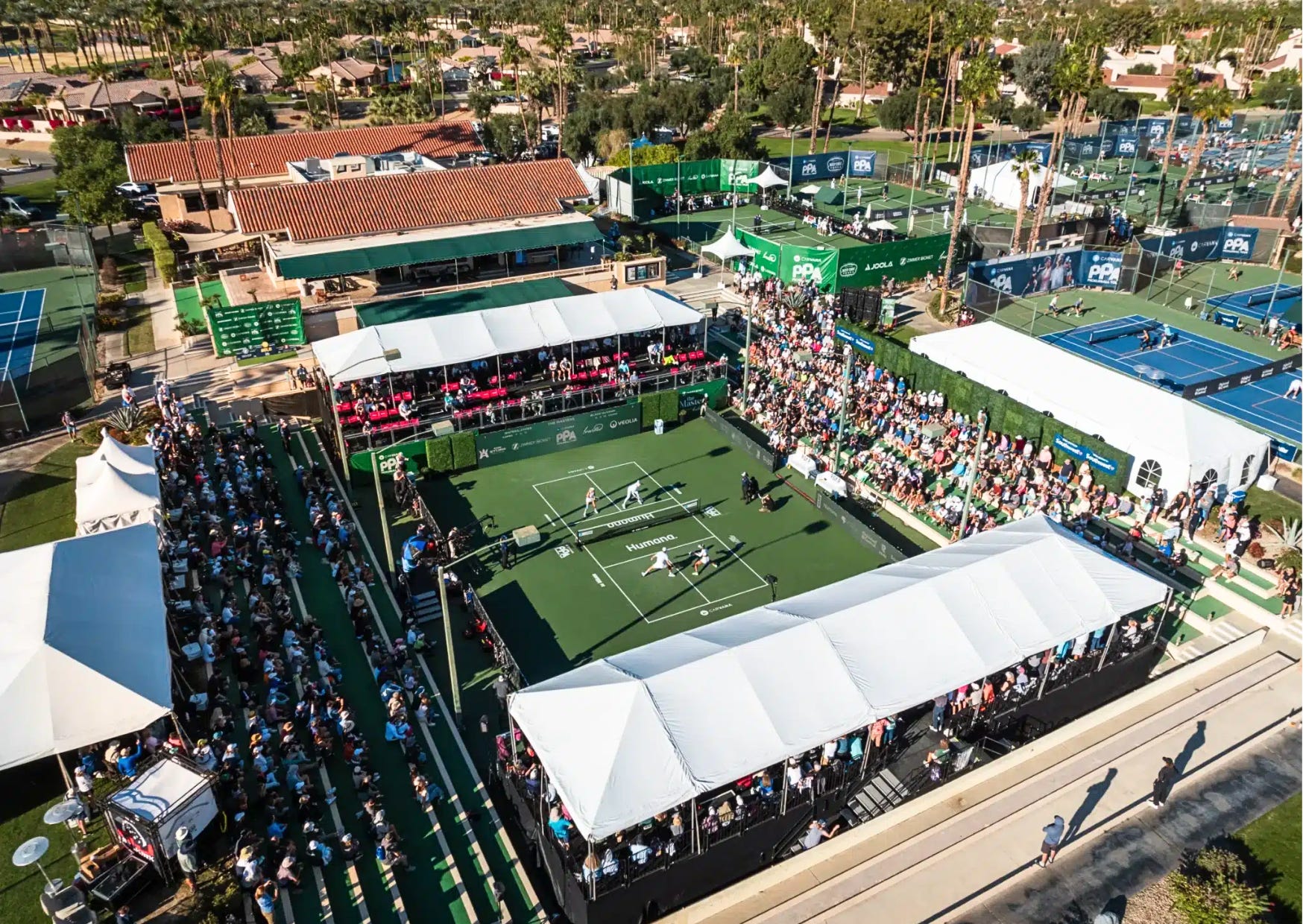
Last month, the Carvana PPA Masters Championship averaged 791,000 viewers on CBS, making it the most-watched pickleball event of any kind on any network ever.
The event was also the top-performing live sports broadcast in its time slot, achieving higher average viewership than several other events that aired simultaneously, including an NBA game on Amazon Prime (528,000 viewers), a Big 12 Women’s basketball game on FOX (677,000 viewers), the Premier League on USA Network (451,000 viewers), and Liga MX on Univision (342,000 viewers). If you include the entire weekend, the PPA also outdrew Big Ten men’s basketball on NBC (719,000), Big 12 men’s basketball on ESPN (544,000), and SailGP’s CBS broadcast (496,000).
This reinforces pickleball’s growth as an emerging television property. While smaller sports leagues typically set viewership records by buying airtime on a major network directly after an NFL game (because a large lead-in can artificially inflate viewership metrics), the PPA delivered 791,000 viewers on a day when CBS had no NFL games.
Now, the world’s leading professional pickleball organization wants to double down on growth. Sources tell me that UPA, the holding company for the PPA (individual competition) and MLP (team competition), is in the early stages of a major capital raise. The numbers are still fluid, but I’m told UPA intends to raise $150-200 million.
This new fundraising round will enable the United Pickleball Association (UPA) to pay down its existing debt and add fresh capital to its balance sheet. But more importantly, as part of its capital raise, sources tell me that the UPA plans to create a private equity-style rollup, with billionaire Tom Dundon serving as the link.
In addition to owning the Carolina Hurricanes and soon the Portland Trail Blazers, Dundon is one of the world’s largest pickleball investors. Not only is Dundon’s private equity firm, Dundon Capital Partners, the UPA’s largest shareholder, but Dundon has spent the last five years acquiring businesses across the entire pickleball ecosystem — from the website you buy a paddle on to the software you use to register for an event.
By combining its professional and amateur tournaments with Dundon’s media, commerce, software, and real estate assets, UPA believes it can create a single, vertically integrated business that generates more than $140 million in annual revenue.
I wrote a detailed breakdown of the professional pickleball landscape a few months ago, which you can read again here. But as a reminder, pickleball is America’s fastest-growing sport, with approximately 19.8 million total players in the United States today.
If current growth rates hold, pickleball will be the country’s fourth most popular sport by year-end — ahead of baseball (17.3 million participants) and soccer (20.4 million), but behind tennis (25.7 million), basketball (31.9 million), and golf (42.7 million).
This growth has created opportunities at the professional level. In 2023, there were two main organizations: the Professional Pickleball Association (PPA) for individual competitions and Major League Pickleball (MLP) for co-ed team-based competition.
But with these two leagues pushing each other toward bankruptcy, because they had to pay increasingly high salaries to retain top talent, a merger was completed in 2024. The two leagues still operate independently today, but a parent company, UPA, was formed to facilitate cross-promotional sponsorships and streamline operations.
The combined entity generated $47 million in top-line revenue in 2024, $64 million last year, and expects to generate approximately $81 million this year. Roughly half of this income comes through sponsorships, including a three-year, multi-million-dollar agreement with DoorDash. And with more than 300,000 tournament attendees last year, the UPA generated an additional $10 million in ticket sales across its events.
UPA Financial Overview 2025
Annual Revenue: $64 million (+36% YoY)
Sponsorship Revenue: $30 million (+25% YoY)
Tournament Attendees: 300,000 (across MLP & PPA)
Total Annual Player Compensation: $33 million
Multiplying the UPA’s $81 million in expected 2026 revenue by a 7.0x-8.0x revenue multiple implies the organization is valued at around $570 million to $650 million.
But given what I am hearing about this new fundraising round, the UPA isn’t trying to sell investors on its current growth rate. The UPA believes it can significantly enhance the value of its business by creating a diversified pickleball operating portfolio that vertically integrates all elements of the ecosystem into a single platform.
Since Dundon is the largest shareholder in both companies, the UPA can merge its professional and amateur events with Dundon’s other investments. This includes Pickleball Central (the leading pickleball ecommerce platform), Pickleball Play Solutions (software and tech solutions for registrations, tournaments, and facilities), and Just Courts Construction (court construction and infrastructure services). Dundon also has minority investments in Picklr (the largest franchise operator of pickleball facilities) and DUPR (the leading global pickleball ratings and data platform).
By merging these businesses into a single holding company, the UPA can generate more than $140 million in annual revenue from sponsorships, media, ticketing, registrations, ecommerce, real estate, and software sales. And while Dundon’s ecommerce (1.0x) and software businesses (6.0x) have different multiples, his entire pickleball portfolio (excluding UPA) is probably worth around $125 million. So, when you combine Dundon’s other assets with UPA, the new holding company can probably raise the $150-200 million at an enterprise value near (or exceeding) $800 million.
Outside of the economics, which sound attractive on their own, consolidating all of these assets into a single platform also changes the investment thesis. Rather than betting solely on the growth of a professional sports league, albeit one with strong tailwinds, investors are now buying a piece of the definitive global pickleball platform.
So if I’m running UPA and I just raised growth capital, here’s what I would do.
First, media. This one’s obvious. The PPA just drew 791,000 viewers on CBS without an NFL lead-in — that tells you the audience is there. The problem is that pickleball’s production quality still doesn’t match its viewership potential. Investing heavily in broadcast-quality production, expanding into streaming and international distribution, and building a robust content pipeline around live events and shoulder programming is the highest-return use of capital available to UPA right now. Get the product right, and the next media rights deal could look dramatically different.
Second, I’d build out a real event calendar. Right now, pickleball doesn’t have a tentpole schedule that casual fans can follow the way they follow Grand Slams in tennis or the majors in golf. The UPA World Championships already generate $4 million in revenue, so the model works. Scaling that to four or five flagship events per year — pickleball’s version of a Grand Slam calendar — could be the difference between remaining a niche broadcast product and becoming appointment television.
Third, grassroots integration. This is the most underappreciated part of the whole strategy. A recreational player who signs up for a local tournament through Pickleball Play Solutions, buys gear through Pickleball Central, and plays at a Picklr facility is touching the same ecosystem at every step. Owning that entire customer journey is what separates a sports league from a platform — and it’s the kind of structural advantage that will be nearly impossible for a competitor to replicate in the long term.
Facilities are also important because stadium sizes aren’t scaling at the same rate as the sport. Building and operating a network of dedicated pickleball venues would be capital-intensive and risky. But if it works, the new holding company can generate additional revenue from year-round programming while also activating in local markets by allowing its MLP teams to serve as hosts. Plus, dedicated venues can help build an identity, directly supporting the UPA’s tentpole strategy we just discussed.
Add all of this up, and the pitch to investors becomes straightforward: after the balance sheet is cleaned up, this isn’t just a professional sports league anymore. It’s a vertically integrated platform that captures revenue from sponsorships, media rights, ticketing, registrations, ecommerce, real estate, and software — with a relatively clear path to breakeven in 2027 and the potential to reach $100 million in EBITDA by 2030.
How investors value the combined entity will depend on whether they buy into the broader ecosystem play. But if pickleball’s growth continues at anything close to its current pace, UPA is positioned to be the only company capturing the sport’s full economic value.
If you enjoyed today’s breakdown, share it with your friends.


